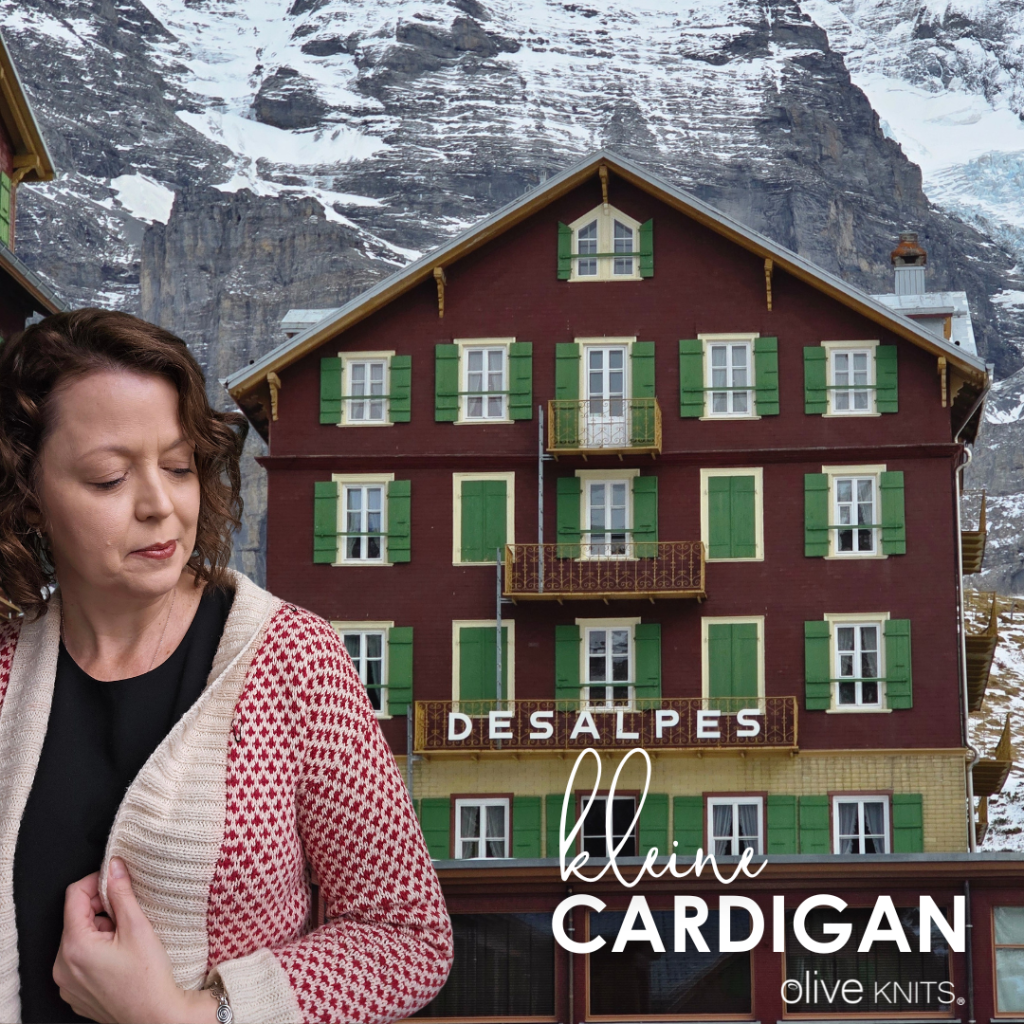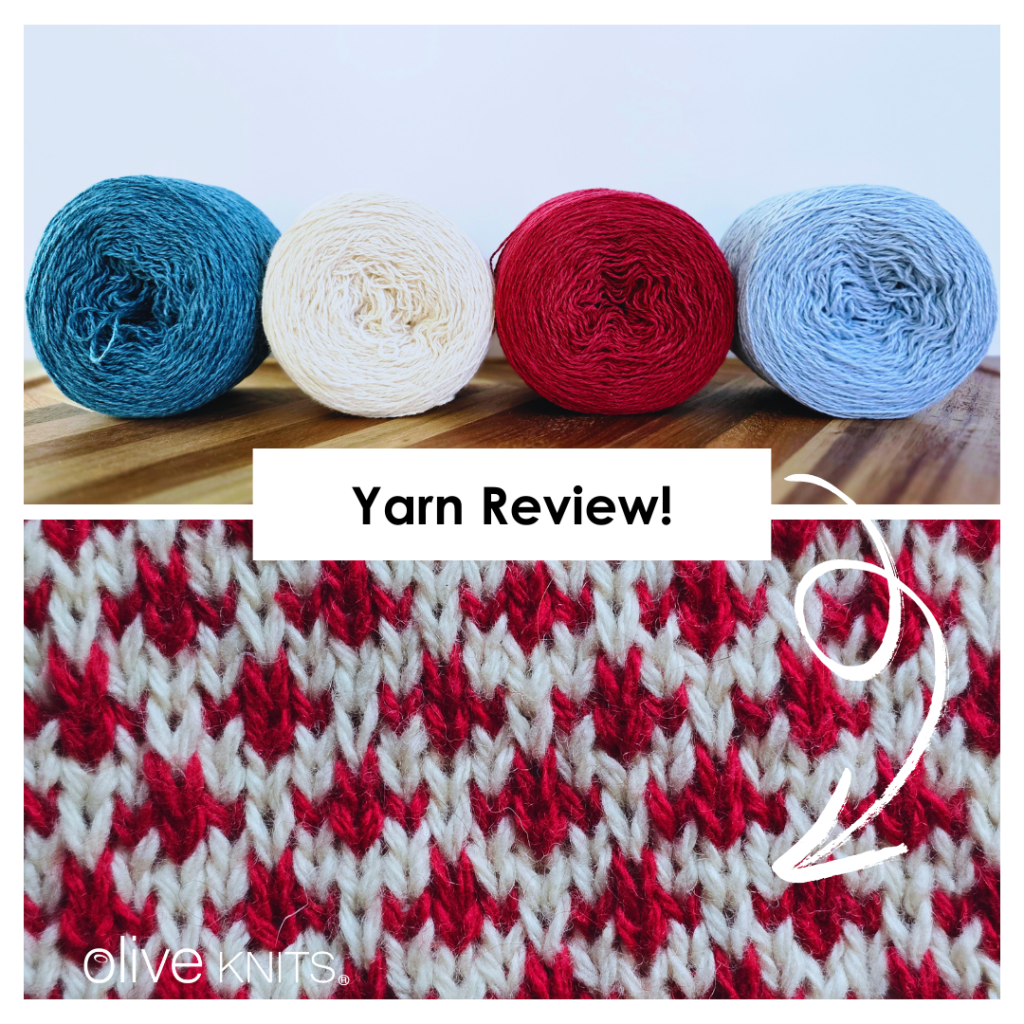
My first love has always been wool. But as days get warmer (and so do I), I find myself leaning a little more on lightweight blends like Holst Garn Coast, which is made of 55% Lambswool and 45% Cotton. It’s incredibly soft and airy, and perfect projects that will sit close to the skin.
A single strand of Coast is a bit too light for most of my projects; each 50-gram cake holds a whopping 383 yards (350 meters). But held double, it creates a beautiful sport/light DK fabric that knits up quickly. And the extensive range of colors provides endless options for creativity, no matter your palette. Better still? The yarn is sold in easy-to-use, pre-wound cakes and/or full-size cones, and the price point is budget friendly.
Observations:
Working from the center of the pre-wound cakes, I had very few issues using two strands throughout my Kleine Cardigan project. Even alternating between two colors (which meant four strands altogether) was relatively easy to do. I love the soft, smooth fabric it creates, and found it to have nice stitch definition. It has the best of both worlds in terms of working with cotton and wool, and those who may generally find wool uncomfortable or itchy wouldn’t find that issue with this.
Swatching & Blocking:
My initial swatches were done in multiple colors with high contrast. (Think white and dark blue, red, and dark green.) I was concerned about using red and white together for my project and wanted to make sure I tested the colorfastness ahead of time. I had no issues with color transfer in my swatch, but did notice a few changes when blocking a full sweater.
I blocked my Kleine Cardigan a couple of times, in part because I knit it in phases and wanted to measure growth after finishing the body (before I started the sleeves). The first time putting the sweater through my traditional wet-blocking process, I noticed some slight color transfer from the red to the cream; more than in the initial swatch, but not so much that it worried me. It was really faint, and I figured it’s still better than most red/white combinations I’ve tried in the past. I blocked the whole sweater again (a second time) after finishing a sleeve and noticed more color transfer on the body than the first time around. It’s still bearable, but it’s more than I’d like.
To be honest, I was surprised to see more a little more color transfer with each additional blocking session; I don’t know that I’ve ever run into that before. Usually, if it’s going to be a problem, you’d see a lot of color transfer the first time around, which would be enough to dissuade me from working with such bold color choices. But guess what? I learned something new!
What I Learned:
If you’re going to throw caution to the wind and knit with red and cream over the entire body of your sweater (knowing full-well that it’s a potentially dangerous combo), then swatch with a LOT more of that bold color and block your swatch twice. I think my mistake was having just a few rows of red in my swatch and probably not giving it as much time in the blocking water as I did with my actual sweater.
Alternatives to Wet Blocking:
Because of what I learned from that second blocking session, I would be inclined to stick to steam blocking for dangerous combinations like red and cream (which are known to be a challenge for color transfer, no matter the brand or fiber content). If you do want to wet-block – which is usually my first choice – I recommend limiting the amount of time your project spends in the blocking water and using colder-than-usual water. As a former soapmaker, I can tell you that the surfactants in wool wash (and most soaps/cleansers) work better in lukewarm (or at least not frigid) water, but in this instance, I would err on the side of preventing color transfer even if it means your wool wash might be slightly less effective.
Conclusion:
Honestly? I love this yarn and have already started a second project with it. Holst Garn Coast has joined my rotation for versatile, workhorse yarns – at a great price – that I’ll reach for again and again.